Best Work Polo Shirts Buying Guide by Role, Industry and Real-World Need


The best polo shirts don’t simply sit there looking decent; they function. They breathe, they stretch, they survive industrial dryers and coffee spills with quiet dignity. And in environments where brand image and team consistency matter, a good polo does something a T-shirt never will: It makes everyone look like they were hired on purpose.
Choosing the best polo shirts for work means balancing fabric tech, fit, durability and yes, branding, without overpaying for the privilege. If you’re responsible for outfitting teams, this polo shirt buying guide exists to help you not mess up. Let’s get into it.
A Side-by-Side Look at Polo Styles from Lands’ End Business Outfitters
You’re not choosing among shirts. You’re choosing among priorities: image vs. function, quantity vs. quality, comfort vs. cost. Here’s a practical breakdown of the five types of polo shirts at Lands’ End.

The Rapid Dry Polo
Our Most Advanced
Polyester Spandex Blend | Starting at $44.95
This shirt knows how to move. The spandex stretch means zero resistance when reaching, bending or hustling between locations, and the moisture-wicking properties really work (as in: not just in the lab). These performance polo shirts for work are made for high-activity environments, like warehouse, logistics and landscaping crews, or any job where sweat happens before 9:30 a.m.
Why It May Be the Right Fit: Stays dry, holds shape, resists clinging.
When It Might Not Be: Less necessary for low-activity or climate-controlled roles.
Shop the Rapid Dry Polo
Flagship Performance
Bestselling Style
100% Polyester | Starting at $34.95
This is the “Goldilocks” option: durable, comfortable, lightweight and, crucially, easy to care for. It’s less high-tech than the Rapid Dry, but still fully moisture-wicking and fade-resistant. That’s why it’s a bestseller. The Flagship Performance Polo works for teams that need polish without the premium tag.
Why It May Be the Right Fit: Strong performance-to-price ratio.
When It Might Not Be: Doesn’t offer the same polish as cotton styles for formal environments.
Shop the Flagship Performance Polo
FlexPique
Reliable Performance
100% Polyester | Starting at $24.95
The FlexPique Polo is all about scale. It’s the budget-friendly option that still performs: breathable, low maintenance and surprisingly durable. If you needed 200 matching shirts yesterday, this is your pick.
Why It May Be the Right Fit: Economical, resilient, incredibly functional.
When It Might Not Be: Less refined finish for brand-forward or premium visual needs than our cotton options.
Shop the FlexPique Polo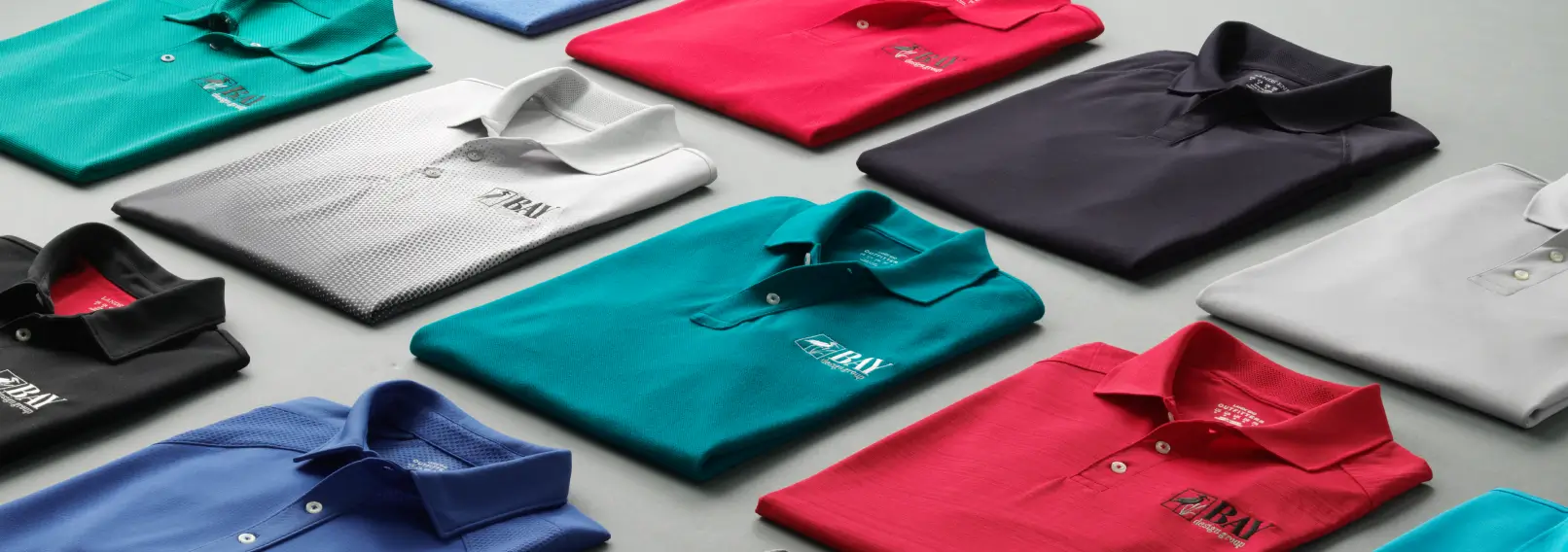
The Signature Supima® Polo
Our Most Professional
100% Supima® Cotton | Starting at $44.95
For customer-facing or administrative teams, fabric finish and structure matter. The Signature Supima® Polo, made of 100% US-grown Supima® cotton, gives off an entirely different signal: intentional, premium and composed. It has a smoother texture, holds its shape better through seated hours and plays well with embroidery, making it ideal for first impressions and long meetings alike. We offer options for men and women.
Why It May Be the Right Fit: Premium feel, high visual polish, adds sophistication to brand image.
When It Might Not Be: Higher maintenance than synthetics, not ideal for physically demanding or outdoor roles.
Shop the Signature Supima® Polo
Essential Pique Polo
All-Purpose Comfort
60% Cotton/40% Polyester | Starting at $34.95
Classic, breathable and familiar. The Essential Pique Polo is great when you want a durable fabric that can hold its own. A blend isn’t as quick to dry as synthetics, but it’s comfortable, especially for hybrid indoor/outdoor roles. This is a good middle-ground choice if your team has varied needs, and you want a consistent look.
Why It May Be the Right Fit: Comfortable, breathable, widely wearable.
When It Might Not Be: Requires more frequent ironing to maintain a crisp look.
Shop the Essential Pique PoloWhat to Know Before You Order Work Polos
Finding the best men’s and women’s polo shirts for work isn’t a creative exercise; it’s operational triage. You’re deciding what hundreds of people will wear, sweat in, wash repeatedly and represent your brand with. And it must work. Not for one day, but for dozens of cycles, in all real-life situations where clothing is the least glamorous and most important.
You need to think about what details will either support your team or slowly unravel, fade, pill and droop their way into uniform failure. Below are the factors that determine whether your next polo order gets quiet praise … or quiet eyerolls.
Fabric: Performance, Comfort and First Impressions
The fabric of a polo shirt determines how it behaves under pressure, literally and metaphorically. It’s more than material; you’re choosing how your team feels eight hours into a shift, how they look after a commute and how your brand is perceived before anyone says a word.
- Polyester is the go-to for performance: lightweight, moisture-wicking and wrinkle-resistant. Great for active roles and warm environments.
- Cotton, especially high-grade options like Supima®, provides polish and breathability but may require more care. Ideal for client-facing or executive settings where fabric finish counts.
- Polyester spandex blends provide important moisture-wicking properties and a better range of motion.
Fit: Function and Presentation
Fit affects how employees move and how they’re perceived. A shirt that’s too baggy looks sloppy. One that’s too tight creates its own HR issues. Somewhere in between lies a well-structured, mobility-friendly silhouette that communicates capability without trying too hard.
- Relaxed fits work for warehouse crews or field staff who need a range of motion.
- Tailored fits (not tight, but tailored) project polish for more customer-facing environments.
Also: Consider hem lengths. A shirt that won’t stay tucked is one shift away from becoming an untuckable liability. When choosing a polo shirt fit, remember: Comfort supports confidence, and confidence wears well on every team.
Durability & Maintenance: The Invisible ROI
Uniforms take a beating. Laundering, movement, weather, repeat. The best work polo shirts aren’t only those that look great out of the bag. They’re the ones that still look sharp after 40 cycles in a commercial washer.
- Look for colorfastness (so your navy doesn’t turn into “mystery blue”).
- Prioritize stitch integrity and collar structure; those fail first and fail loudly.
- Consider anti-pill treatments and easy-care labeling as more than just nice-to-have. They’re cost saving over time.
Customization & Brand Alignment
Let’s talk logos, embroidery and colorways. Not all polo shirt fabrics hold embroidery well, and not every dye holds its hue after repeated exposure to fluorescent lighting and overachieving HVAC systems. When you’re considering custom polo shirts for employees, remember:
- Polyester polos handle logos cleanly and retain vibrancy.
- Cotton polos offer a more premium canvas but may fade sooner.
- Color consistency matters if you’re reordering over time: Some polo shirt styles guarantee dye lots; others don’t.
Custom-embroidered work polo shirts are a great way to differentiate your brand.
Matching the Right Polo to Your Work Environment
You wouldn’t put a landscaping crew in white cotton mesh. Or hand your sales team a budget poly blend and expect them to close deals without ironing. The best polo shirts for work are only “best” in context. What works in a showroom doesn’t always work in a warehouse. This section breaks down which polo shirt styles align with the real needs of different environments. Let’s look at the best polo shirts by industry and job function.
For Active, Outdoor or Physically Demanding Roles
If your team spends more time moving than sitting (loading docks, delivery routes, landscaping crews, maintenance staff), you need a uniform that keeps up.
- Best Choices: Rapid Dry Polo, Flagship Performance Polo
- Why: Moisture-wicking polo shirt fabrics and stretch blends are the only choice when uniforms are under physical stress. Rapid Dry adds spandex for a better range of motion.
Avoid cotton-dominant styles here. Extensive labor in cotton can cause sweat stains and stretching. For active roles, polyester and polyester blends are always your best choices. Explore how to select the best fabrics for summer uniforms.
For Retail, Hybrid Roles and Light Physical Work
Not every job is extreme. Some require steady movement, long hours and consistent polish. Think grocery staff, floor managers, school support personnel and hospitality teams. These people need comfort, but they also need to look presentable across an eight-hour shift without frequent mirror checks.
- Best Choices: Flagship Performance, Essential Pique
- Why: Breathability matters, but so does looking sharp in a mirror. Polyester provides a consistent shape and wicks away moisture for a cooling effect.
Here, fit starts to matter more. You’re not hiding in a warehouse. How a polo lays, how the collar sits, how easily it wrinkles; these are small signals that shape how customers perceive your brand.
For Office Staff, Front Desks and Client-Facing Roles
Here’s where too many companies cut corners. The polos worn by the janitorial crew shouldn’t be the same as those worn by client-facing roles and reception staff. Keep things accessible where you can but be sure to pay special attention to team members who need to present themselves as polished, sophisticated and capable to customers.
- Best Choices: Signature Supima® Polo
- Why: These are roles that demand polish without stiffness. Supima® cotton gives a refined look, a smoother drape and a better collar stance, even after eight hours at a desk.
Yes, it’s more expensive. But so are brand perception failures. The cost of showing up underdressed in front of a client is never printed on an invoice, but you’ll notice it all the same. Of course, certain situations call for something different. Learn when to choose a polo vs. a button-down for work.
For Large Uniform Programs or Budget-Conscious Orders
Sometimes you need 500 shirts that all look the same and stay within a number that doesn’t make finance sweat. Uniform rollouts, seasonal teams and temporary staffing, all these situations call for a different metric: durability at scale.
- Best Choices: FlexPique
- Why: You need volume, not velvet. These options are functional uniforms that won’t wipe out your quarterly budget. Ideal for high-turnover or high-replacement environments.
The key to budget-friendly polos is knowing when they make sense. They work well for onboarding kits, short-term contractors or trial programs. These are often the best polos for uniforms, but they don’t belong in high-visibility roles or environments where appearance equals trust.
Franchise Operations or Tiered Teams
If your workforce spans multiple functions, such as retail floors, back offices and field service, don’t try to force a one-shirt-fits-all approach. Uniformity doesn’t require uniform sameness. It requires consistency in branding and color, not polo shirt fabric and fit.
- Best Strategy: Mix & Match within Brand Standards
Assign Signature Supima® Polos to management, Flagship Performance Polos to general staff and FlexPique Polos to high-turnover roles. Use consistent embroidery, standardized placement and tight color matching to tie it all together. This way, your brand looks coordinated without flattening the individuality or needs of each role.
Find Polo Shirts for Your Brand and Budget at Lands’ End Business Outfitters
Choosing the best polo shirts for work doesn’t have to be a guessing game. Our outfitting specialists are available to help you navigate fabric options, fit considerations, branding details, bulk ordering pricing and logistics, so you get polo shirts that look sharp, perform well and hold up under real-world conditions.
If you’re serious about getting it right, skip the trial-and-error and talk to someone who’s done this thousands of times. Request a free quote today!
Get a Free Quote from Lands’ EndFrequently Asked Questions
How do I decide between a cotton polo and a performance polyester polo for my team?
Start with the job, not the fabric. The question to ask is: What does a typical shift look like for the people wearing these shirts?
Performance polyester, including our Rapid Dry and Flagship Performance styles, excels in physically active environments. It wicks moisture away from the body, dries quickly and holds its shape through repeated commercial laundering. If your team is moving all day, working outdoors or operating in warm conditions, polyester is the practical choice.
Cotton, particularly our Supima® option, tells a different story. The fabric has a naturally softer hand feel and a more refined drape, qualities that matter in client-facing roles, front desks or administrative settings where polished presentation is part of the job. The trade-off is maintenance: Cotton generally requires more attention to stay crisp and isn't forgiving in high-sweat conditions.
The good news is you don't have to choose one for your entire organization. Many programs mix both, with Signature Supima® Polos for management and customer-facing staff and performance styles for field or ops teams, using consistent embroidery and color to keep the brand unified across roles. Our Outfitters can help you map the right fabric to each function, so the whole program works together.
Can I order samples of each polo style before committing to a full program rollout?
Yes, and we'd encourage it. Getting the fabric, fit and sizing right before a full rollout protects your program and your budget. Lands' End Business Outfitters offers Fit Kits: complimentary sizing samples that let your team try styles before you lock in your order. It's a practical step that saves a lot of back-and-forth down the road, especially for larger or multi-location programs.
Beyond sizing, since we have no minimum order requirement for Lands' End-labeled products, you can also order a small run of your top two or three styles to test them under real working conditions before scaling up. That means your warehouse crew can wear the Rapid Dry Polo for a few weeks, your front desk can test the Signature Supima® and you make the final call with actual feedback in hand, not a guess. Talk to an Outfitter about setting up a Fit Kit or a pilot order for your team.
How does embroidery look different on cotton vs. polyester polo fabrics?
The short answer: both take embroidery well, but they produce distinctly different results. Knowing which look you're going for helps you choose the right fabric from the start.
On cotton, and especially on premium Supima® cotton, embroidery sits against a smooth, flat surface. The result feels substantial and classic: Stitches land cleanly, the logo has good visual weight and the overall effect reads as polished and intentional. It's the kind of finish that suits professional environments where brand presentation carries real stakes.
On polyester, embroidery holds up exceptionally well through wash cycles and heavy use, and the tighter knit structure of performance fabrics keeps logos looking sharp over time. The finish is slightly different in character, crisper and more graphic, but it photographs well and stays true to your brand's colors across a large team.
One thing that matters, regardless of fabric, is color accuracy. Our Color Expertise You Can Count On program locks every dye recipe on file, so when you reorder six months later or stock a new location, the embroidery thread and shirt color match the original exactly. For programs that span multiple sites or grow over time, that consistency keeps your brand looking intentional.