A Strategic Guide to Modern Cabin Crew Uniforms

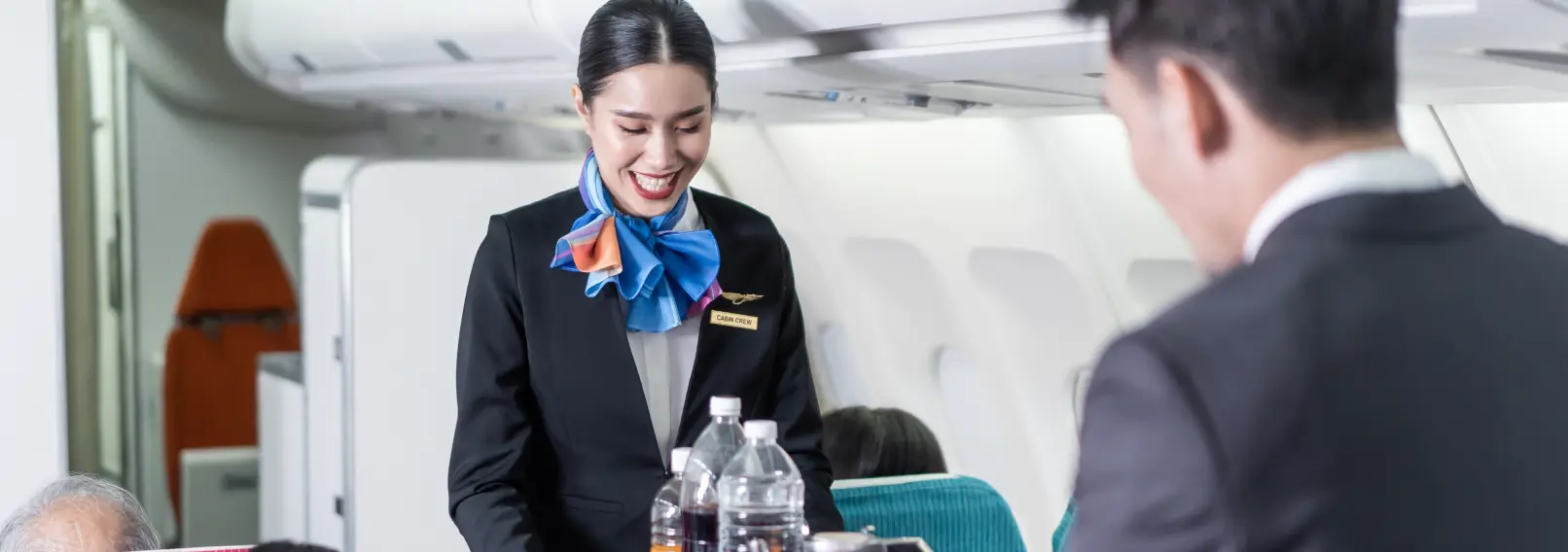
Cabin crew uniforms are one of the most visible parts of an airline’s brand. They’re in front of every passenger on every flight for the life of your uniform program. That’s why it’s so important to get them right. The best cabin crew uniforms should be able to hold up across brand identity, program scale, crew trust and day-to-day comfort, all at once.
This guide is for airline leaders evaluating airline uniform programs. We’re covering the five areas worth weighing before you choose a partner: brand unity, capacity, trust, experience and stewardship.
Brand Unity: Every Uniformed Role Is a Brand Touchpoint
Every uniformed employee, pilot, flight attendant and gate agent is a walking extension of your airline’s brand. Passengers recognize this instantly, even if they don’t consciously register it. Maintaining a cohesive look across every role signals a tight operation, while mismatched or dated uniforms undercut brand trust before a flight even boards. Brand unity in a cabin crew uniform program means:
- Color and material consistency hold the same look across fleets, bases and reorders placed years apart.
- Timeless silhouettes stay current for years, not just a single season.
- Coordinated accessories, ties, scarves and insignia unify every role under one identity.
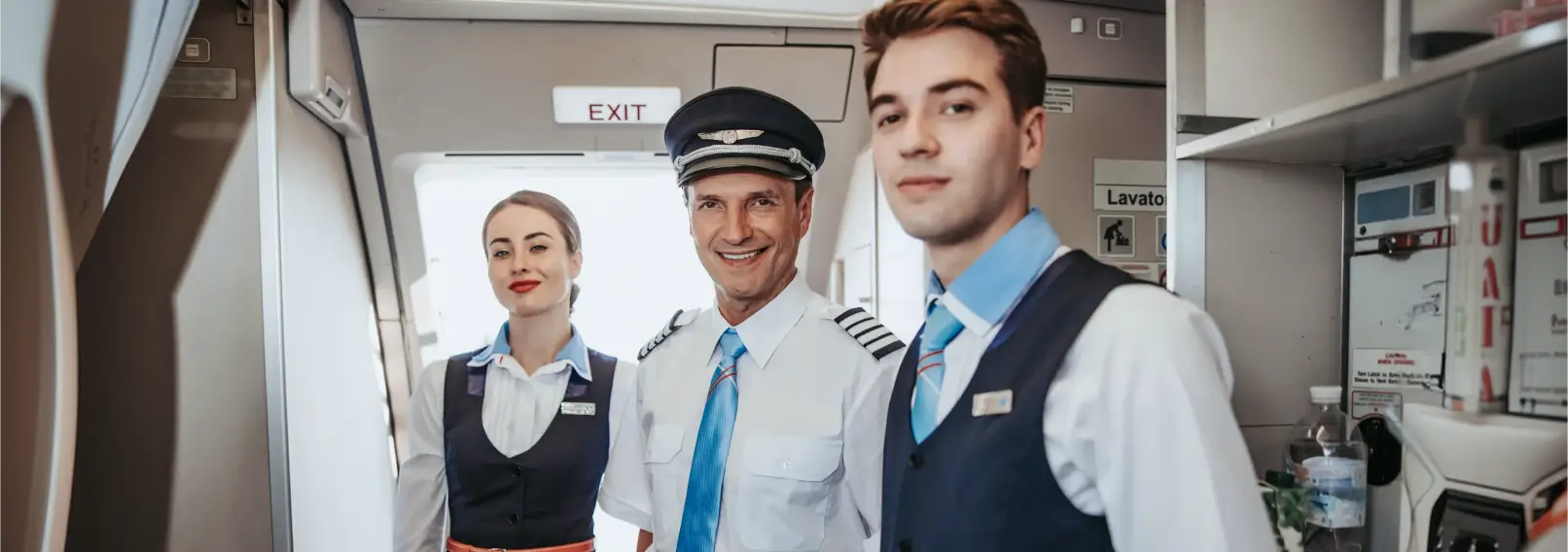
At Lands’ End Business Outfitters, we have the largest embroidery footprint in the U.S., featuring 700 embroidery heads and 300-plus thread colors. Every order also comes backed by our Color Expertise You Can Count On, so insignia and brand colors always match precisely, even on a reorder placed years later.
If you still need to make those early design decisions (silhouette, cut and overall look), our guide on how to design company uniforms walks through the process. And if color is the piece holding you up, our article on choosing business uniform colors covers how to pick a palette.
Capacity: Managing a Uniform Program at Airline Scale
For procurement and program managers, the uniform itself is often the easy part. The harder problem is capacity: keeping thousands of crew members across multiple bases sized, stocked and replenished without gaps. A managed uniform program that works at airline scale needs:
- Inventory forecasting to anticipate seasonal hiring and replacement cycles before a shortage.
- A flexible ordering system that works, whether a base needs five uniforms or five hundred.
- Consistent lead times, so no hub waits weeks longer than another for the same order.
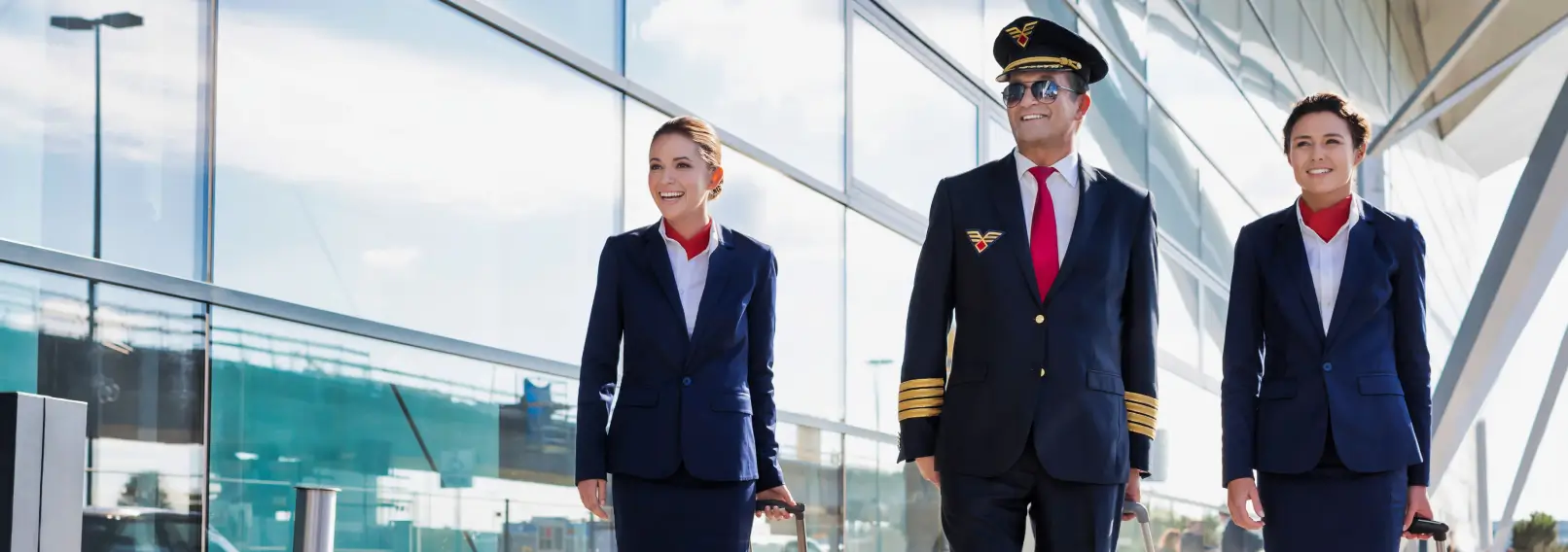
We support airlines with a proprietary inventory-forecasting algorithm (updated monthly to track demand) and custom-branded online storefronts to handle ordering across every base. Whether you’re expanding your route network or merging with another carrier, our program management tools help keep your program on track without turning it into a full-time job for whoever manages it.
Trust: Comfort, Safety and Durability for the Realities of Airline Work
Cabin crew work is physically demanding and tough on uniforms: long-haul shifts, pressurized cabins, service carts, turbulence, etc., are all part of the job. Laundering cycles alone come around far more often than a typical corporate wardrobe ever sees. Trust starts with knowing whether a garment is actually capable of withstanding the work, not styled to look the part.
That means checking for independent lab testing. OEKO-TEX certification is one baseline worth confirming with any supplier, covering chemical safety in finished textiles. Some roles also call for flame-resistant or self-extinguishing fabric, and that testing should be current rather than assumed.
Durability testing matters just as much. Colors need to hold through repeated industrial laundering, seams need to hold under constant motion and the fit needs to hold its shape, shift after shift. Ask to see the lab results, not just a spec sheet.

A cabin crew uniform that can pass these tests will do its job without drawing attention. One that can’t will fade, thin or give out at the seams mid-shift, undercutting crew confidence and brand image at once. The link between uniform quality and confidence isn’t unique to aviation. Our guide on the benefits of employee uniforms covers why it holds true across industries.
Experience: Comfort That Holds Up Through a Full Shift
Style earns the first impression, but comfort determines how flight attendant clothes perform shift after shift. Flight attendant and cabin crew uniforms that look sharp but feel restrictive will undermine morale fast. Look for fabric that resists wrinkling, holds color and shape through repeated wash cycles, and allows enough stretch for long-haul shifts and changing temperatures.
Fit matters just as much as fabric. A uniform cut for only one body type forces some crew members into workarounds that the rest of the team never has to consider. Lands’ End Business Outfitters offers sizes from XXS through 5XL, all at one price. Having a complete size range to choose from gives every crew member a uniform that fits like it was made for them, because it was.
Stewardship: A Partner for Wherever the Program Goes Next
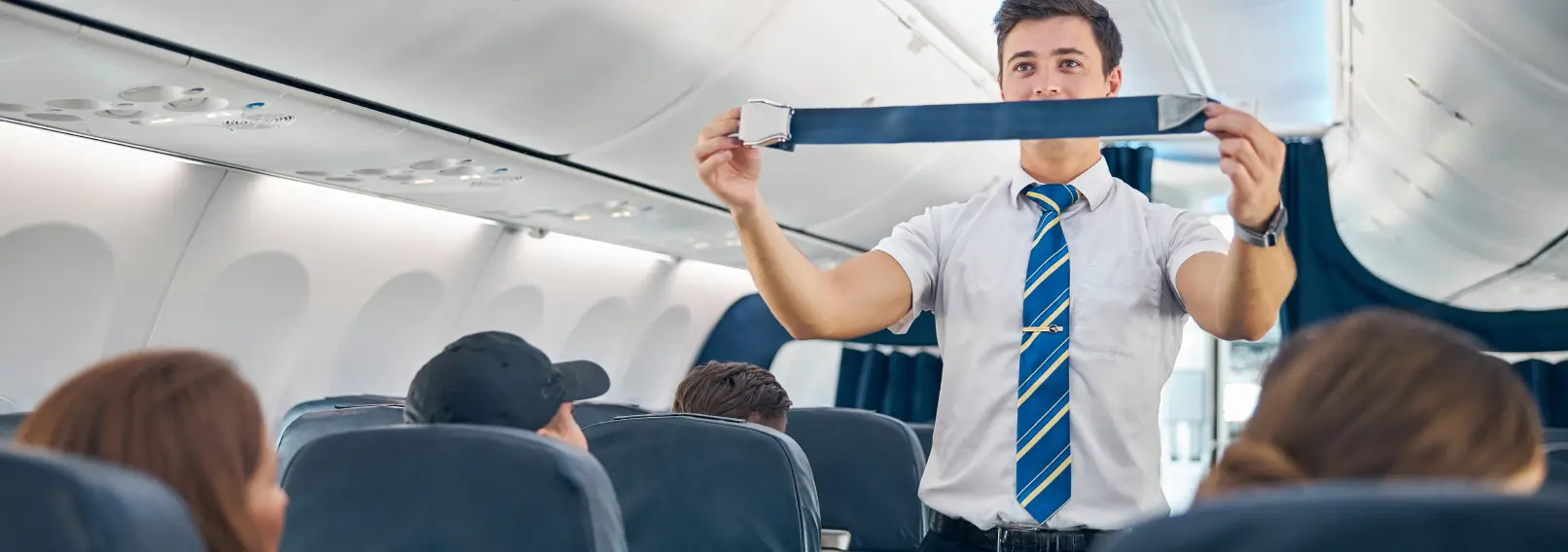
Sustainability commitments, regulatory requirements and airline priorities all shift over the life of a uniform program, often faster than a single refresh cycle. That takes an ongoing relationship with a uniform supplier who stays engaged as those requirements change.
A checklist completed at launch won’t help if things shift years later. When searching for a supplier, look for one who can speak about fabric sourcing and manufacturing practices, who flags when a material should evolve before being asked and who treats the program as a partnership. We work this way: as trusted advisors, wherever the journey leads next.
Start the Conversation About Your Uniform Program Today
No two airline uniform programs are the same. Tell us where yours stands, and we’ll help map out what comes next.
Talk to an Outfitter TodayFrequently Asked Questions
How often should airlines update their cabin crew uniforms?
Airlines typically refresh uniform programs based on brand evolution, crew feedback and operational needs, with timelines ranging from five to 30 years, depending on strategy and resources.
What are the best practices for updating flight attendant uniforms during a rebrand?
Successful updates keep visual ties to brand heritage while introducing deliberate, visible change. This could include a new color, a modernized cut and/or updated accessories, so the program signals renewal without losing the continuity that makes the brand recognizable.
How do climate and geography affect cabin crew uniform design?
Airlines operating across multiple regions often require layered systems or fabric variations, and the needs vary from base to base. A program designed for a single climate zone tends to break down the moment a route network expands into another.